
Energy Storage Cells Enter a Broad Price-Hike Cycle
China’s energy storage industry is in a wave of price adjustments. CATL raised storage cell quotes twice this quarter — now at RMB 0.403–0.470/Wh — while system and inverter leaders including Sungrow and Growatt announced increases of 5%–15%, citing sustained gains in copper, aluminum and lithium. Strong demand underpins the shift: domestic storage cell shipments grew over 80% year on year in H1 2026, with leading lines running at full capacity.

China’s Policy Pivot: From Price War to Quality Competition
From 1 September 2026, China resumed a 2% consumption tax on lithium batteries, rising to a planned 4% by 2027, while battery export VAT rebates have been cut from 9% to 6% and will end entirely on 1 January 2027. The measures aim to curb cut-throat price competition and push the industry toward technology, quality and global manufacturing footprints

AI Data Centers Become Storage’s Biggest New Growth Engine
Storage demand is no longer driven by renewables alone. AI computing build-out, energy transition needs and grid congestion now work in combination. In the US, FERC has opened a fast-track grid connection pathway for large loads, and co-located battery storage is increasingly deployed to stabilize volatile AI workloads. Global battery storage investment is set to surpass USD 100 billion in 2026 for the first time (IEA)
Home Energy Storage – Transforming Your Lifestyle
The Battery in Your Garage Is Becoming a Business1. Demand has already exploded — it isn’t a projection
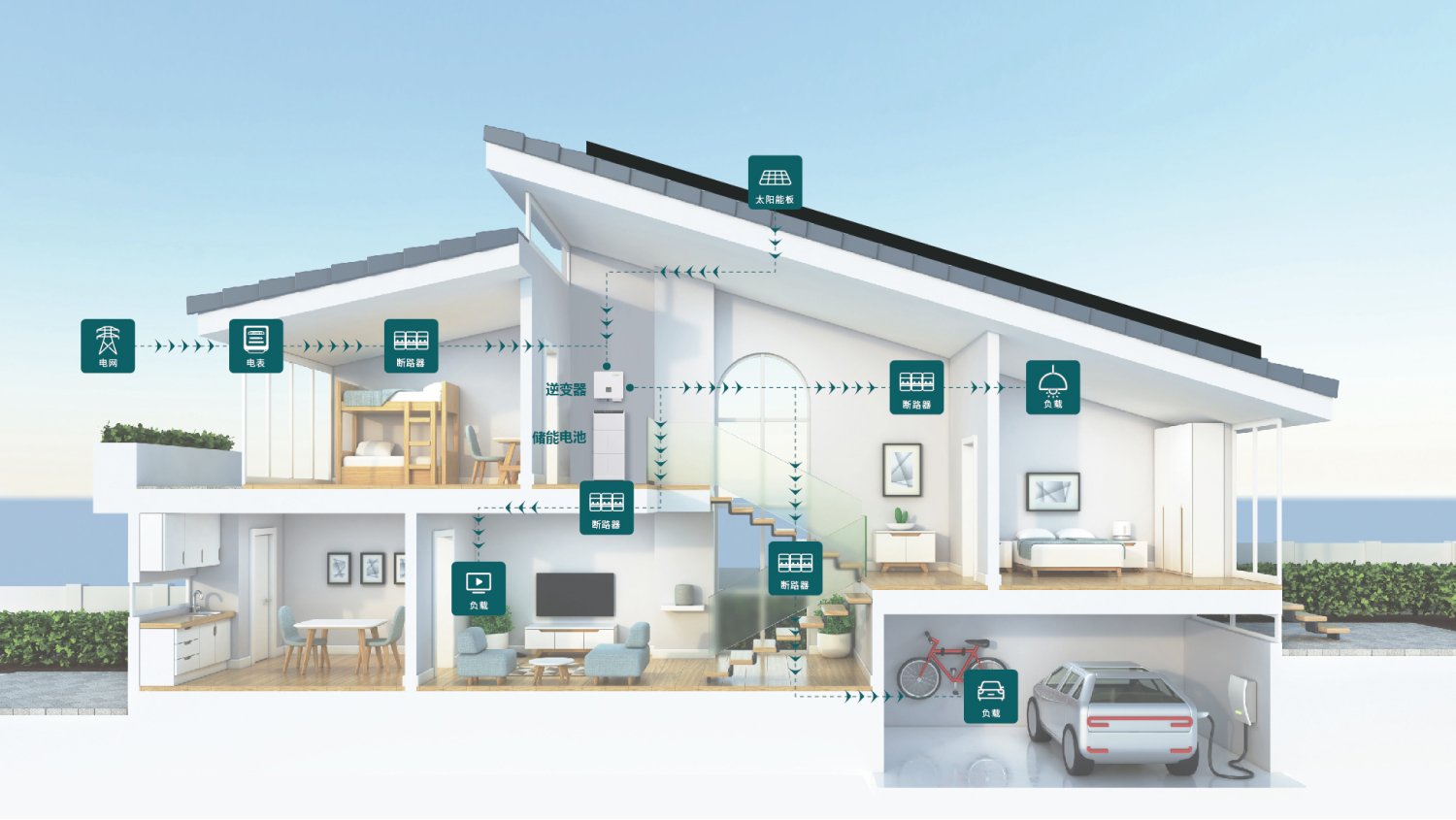
Global residential energy storage battery shipments reached 106.0 GWh in 2025 [2]. On a new-installed-capacity basis, 2025 came in at roughly 35 GWh, up close to 50% year on year; several institutions forecast 46.74–52 GWh for 2026, a growth rate of about 80%–83% (forecast) [3][4].
The longer arc is clearer still: between 2021 and 2025, residential storage system shipments grew from 3.8 GWh to 42.0 GWh, a compound annual growth rate of 82.3% [3]. Across the storage sector as a whole, the world added 108 GW of battery storage in 2025, 40% more than in 2024, taking cumulative capacity to 11 times its 2021 level (IEA) [1].
In fairness, though: a doubling market does not mean everyone profits. Global residential storage shipments rose 137% year on year in the first half of 2026, yet profits diverged sharply between leading and mid-tier manufacturers, with the latter stuck in a price war [12]. This growth is concentrating, not spreading.
1. Prices came down — the real reason behind the inflection
The global average price of residential storage systems fell 18%–22% in 2026 versus 2024 [3]. In China, the end-user price of a 10 kWh system has dropped to RMB 25,000–35,000, 30%–40% below 2022 levels [6].
After that decline, the payback period entered a range ordinary households can actually accept (2026 industry estimates) [6]:
| Scenario | Annual return | Payback |
|---|---|---|
| Rural Zhejiang, PV but no subsidy | ≈ RMB 3,800 | ≈ 7.9 years |
| Rural Guangdong, PV plus subsidy | ≈ RMB 4,800 | ≈ 6.3 years |
| No PV, no subsidy | — | ≈ 18.8 years |
Solar Leads, Storage Is Essential
Global Green Energy and PV-plus-Storage Market Trends: An Executive Summary
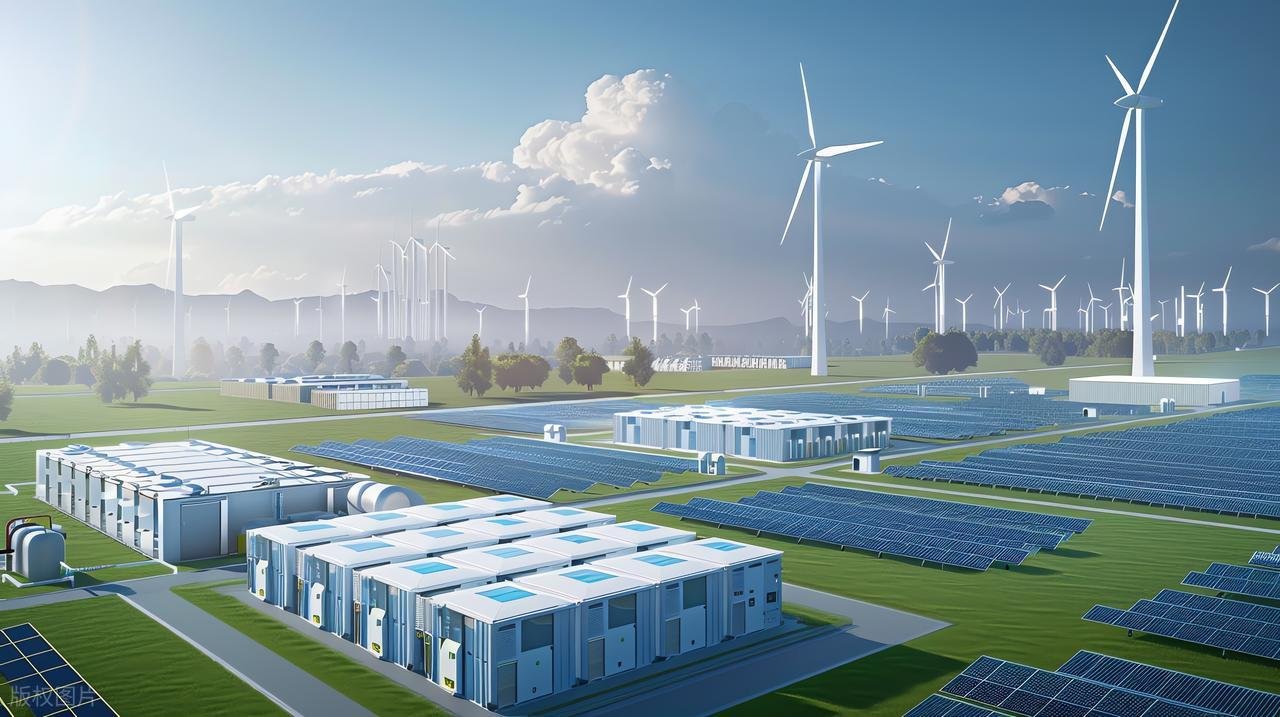
Global green energy has entered a new phase best described as “solar-led growth, storage as necessity.” In 2025, solar PV became the single largest contributor to growth in world energy demand, with cumulative installed capacity approaching 3 TW. That same year, newly grid-connected energy storage worldwide crossed the 100 GW mark for the first time, and cumulative battery storage capacity surpassed 250 GW — overtaking pumped hydro as the world’s largest storage source. The two curves are now clearly diverging: solar additions are projected to post their first year-on-year decline in nearly 20 years in 2026, while storage is expected to grow by roughly 50% over the same period. The center of value in the power sector is shifting from generation to flexibility.
Economic restructuring is the underlying driver. In several major European markets, the capture price earned by solar fell below 40% of the average market price in 2025, breaking the financial model of merchant solar farms and turning co-located storage from an option into a survival requirement. The global PV-to-storage capacity ratio has narrowed from 56:1 in 2016 to 6:1 in 2025, and is expected to reach 4:1 in 2026. In high-resource regions, the levelized cost of solar-plus-storage has already dropped to USD 54–82/MWh and is projected to fall below USD 50/MWh by 2030 — the point at which green power can compete with fossil generation around the clock, not just during sunlight hours.
Technology is advancing on two fronts. In solar, n-type cells have fully replaced p-type (97% silicon wafer market share in 2025), with TOPCon, back-contact and heterojunction routes each occupying differentiated niches; perovskite-tandem cells have exceeded 35% efficiency and are entering the GW-scale production window. In storage, lithium iron phosphate still accounts for 90% of new installations as cells scale beyond 500 Ah; 2026 marks the first year of commercial-scale deployment for long-duration storage, with all-vanadium redox flow and compressed-air system costs down 40%–50% from their initial levels; sodium-ion batteries have achieved industrialization by breaking into backup power for AI data centers.
Regional markets are diverging sharply. China’s solar additions have entered a plateau, yet Chinese storage installations have ranked first worldwide for four consecutive years, accounting for 54% of global growth, with computing-power-electricity coordination and capacity pricing providing the next wave of demand. Europe’s utility-scale storage is forecast to grow 167% in 2026, taking the baton from residential systems. The United States hinges on data-center co-located storage as its key source of new demand. The Middle East has become a price trough at USD 65/kWh, while Australia, Southeast Asia, India, Latin America and Africa are all scaling up simultaneously. Trade barriers are rising in parallel — US tariffs on Chinese solar modules exceed 250%, and the EU requires over 40% local capacity share by 2030 — pushing Chinese manufacturers from product exports toward “offshore production plus system integration plus O&M services.”
Risks coexist with the opportunity. The report flags four constraints: localization requirements are raising cost structures; price involution is eroding profitability; sodium-ion material bottlenecks (hard-carbon anode supply) are limiting new-scenario ramp-up; and grid absorption limits and policy rollbacks are dampening installation growth. The honest picture of 2026 is one where optimistic forecasts and widening profit divergence coexist — this round of growth is concentrating rather than spreading, and market size does not automatically translate into returns for any individual player.
When Storage Systems Burn, the Culprit Usually Isn’t the Battery
Five paths to safer energy storage
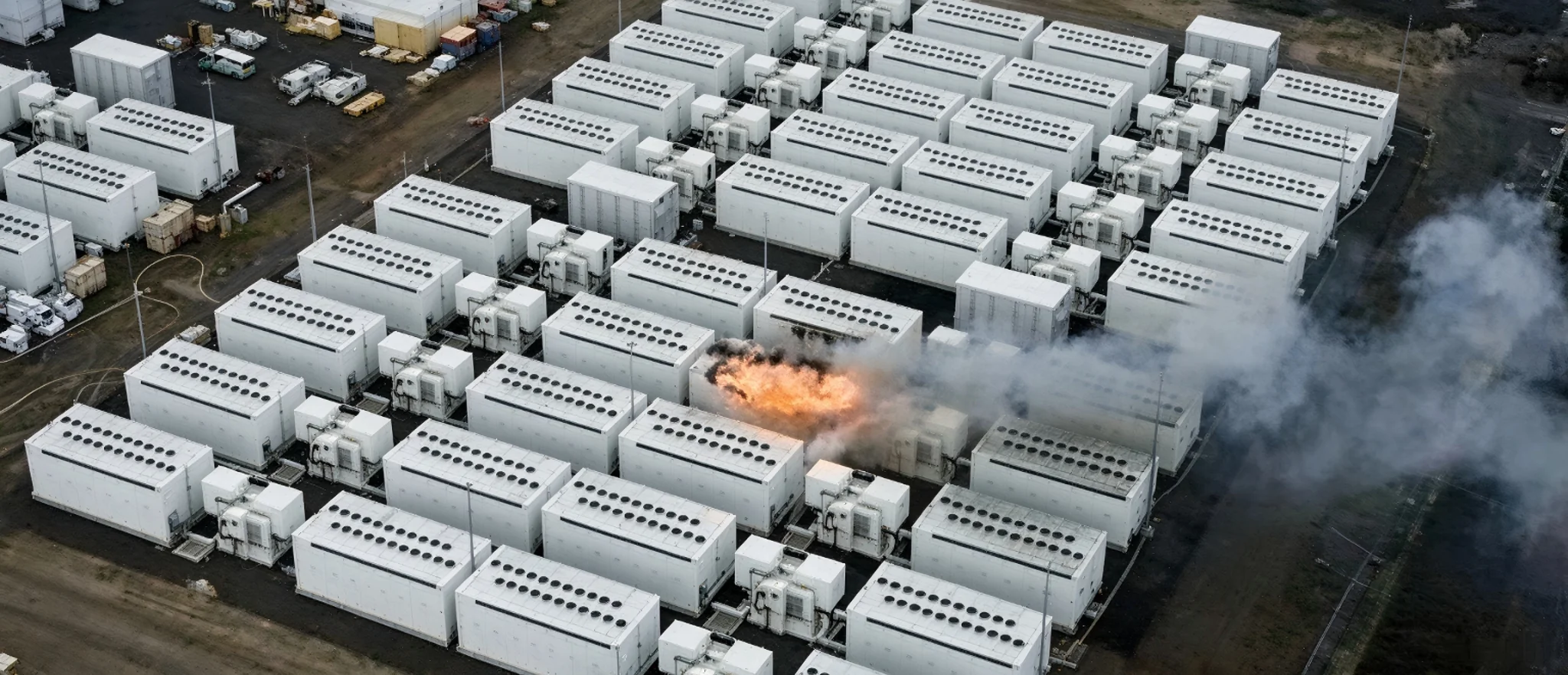
For years the industry has worked on a gut assumption: when an energy storage system catches fire, the battery is to blame. A study published in Applications in Energy and Combustion Science overturns that assumption. It tabulated 102 battery storage fire incidents worldwide between 2016 and 2025 and found that system-level defects accounted for 54.5% of the causes, while battery faults accounted for just 21.2% — the former 2.5 times the latter. “System defects” in this dataset means battery management system misjudgement, thermal management failure, electrical connection faults and improper protection settings.
The numbers reset the investment priority: spending on management accuracy, thermal redundancy and integration quality pays off faster than chasing new cell chemistries.
Regulation is now writing back the safety margin that price competition had stripped out. In August 2025, GB 44240-2024 took effect as the first mandatory national standard governing lithium batteries and battery packs used in energy storage. In April 2026, the plant design standard GB/T 51048-2025 drew hard lines: prefabricated lithium-ion and sodium-ion battery cabins may not be placed underground, semi-underground or on rooftops; the fire-separation distance from civil buildings must be at least 25 metres; and pack-level embedded fire protection becomes mandatory rather than optional. Revised standards for traction batteries raised the bar in parallel, moving from “five minutes of warning to evacuate” to “no fire and no explosion for two hours after thermal runaway.”
Five technical paths have taken shape within that framework. The first is layered fire protection, pushing suppression out of the container volume and into the battery pack itself, so the intervention point moves from “a cabin full of smoke” back to “a single module beginning to vent.” The second combines thermal management and fire suppression in one loop, using the same medium to cool during normal operation and to extinguish in an emergency; such systems are expected to reach 20% penetration in high-safety-specification projects by 2027, and IDTechEx forecasts the market for storage thermal management and fire protection systems and materials at over USD 25 billion by 2036. The third is AI-driven early warning, identifying thermal runaway 15 to 20 minutes in advance, extinguishing open flame within 3 seconds and sustaining re-ignition protection for 48 hours. The fourth is intrinsic safety at material level, where sodium-ion and solid-state cells pass nail penetration, crush and overcharge tests without fire or explosion. The fifth is plant-level empirical validation: large-scale fire testing has become the industry’s gold standard, with more than 10 leading companies completing such tests since 2024.
Market mechanisms are catching up. China’s insurance industry association has published a risk assessment guideline for electrochemical storage plants, mapping more than 20 categories of risk across the full project lifecycle, and regulators are studying whether to link safety inspection results to capacity payments. Once safety converts into revenue, investment stops depending on goodwill.
The warning signs are equally clear. Industry analysts list five sources of disorder behind the risk curve: price involution, assembly-style contract manufacturing, blind upscaling of cell capacity, low-quality delivery and disorderly capacity expansion. And three fires at a German lithium iron phosphate storage plant within three months make an uncomfortable point: LFP chemistry lowers the severity of thermal runaway, not its probability.
The conclusion for buyers is blunt. Do not stop at a cell nail-penetration report. Scrutinise thermal management redundancy, protection settings, and the operations and maintenance regime — then write fire-test evidence and third-party risk ratings directly into the tender. Overseas customers already pay a premium for demonstrable safety. Safety is turning from a compliance cost into a competitive advantage。